
Mount Morris Township Resident Lookup Records
The township itself publishes no official name directory. A Mount Morris Township resident lookup instead draws on records kept by different custodians. The assessor links an owner to a parcel. The Register of Deeds preserves the recorded transfer trail behind each deed. Michigan's voter system confirms limited registration details, while courts and vital-record custodians answer separate case and event questions. Treat every source as evidence of a role on a given date, not proof that everyone sharing a name lives at one address.
Keep the city and township distinction sharp. Mount Morris Charter Township is not the incorporated City of Mount Morris next door. A postal label alone settles nothing about jurisdiction. Before trusting a match, check the municipal label in the parcel record, plus the voter jurisdiction and precinct material where it applies.
| Record | What It Confirms | Where | Access |
|---|---|---|---|
| Assessment record | Owner, parcel, situs and tax-mailing fields when displayed | Mount Morris Township BS&A | Address, name, or parcel-number search; office inspection is also available. |
| Recorded instruments | Grantor, grantee, dates, legal description, and instrument references | Genesee County Register of Deeds | Online search has a pre-1983 gap; office and historic-index routes remain important. |
| Voter record | Public registration, jurisdiction, and status information | Michigan Voter Information Center | Public fields are limited by Michigan law; a scoped QVF request is a separate route. |
| Court record | Public case identity, docket activity, or case disposition when available | MiCOURT Case Search | Protected, sealed, juvenile, and certain cleared material may not appear. |
| Vital record | Whether a qualifying Michigan life event occurred | MDHHS Vital Records | Eligibility, historic-copy rules, and ordering method depend on the record type. |
When one record yields a useful lead, write down the source, the date, and the exact spelling. That single habit makes a second-source comparison possible without blending separate people into one profile.
Mount Morris Township Name Anchors
Anchor every resident lookup with two non-sensitive facts. A full name paired with the township or Genesee County is a sound start. A name plus an approximate year, parcel number, prior street address, spouse, or recorded-instrument date will separate same-name results in a street directory or city directory search. A bare name is only a lead, especially where an adjacent city shares the Mount Morris postal name.
Normalize before you reject a result. Compare middle initials, suffixes, former or married surnames, spacing, punctuation, and business-entity abbreviations. Keep each spelling exactly as the custodian returned it. A tax mailing address is where notices go, not a finding about occupancy. In the same way, a voter residence field is a statutory election record, never a complete list of who lives at a street address.
- Parcel
- A local property identifier that ties an assessment record to a legal description and map location.
- Index
- A searchable list pointing to a record. It can identify a document without including the document image itself.
- Situs address
- The physical location of a parcel, which can differ from the address used for tax notices.
For a questionable parcel match, give the assessor the parcel number and ask for a focused verification. That works far better than requesting a broad list of people.
Mount Morris Township Court Lookup Route
Mount Morris Township sits in Genesee County's out-county area. The 67th District Court records route at its records page is the right district-court starting point. That page directs public searchers to MiCOURT. It also explains that cases before July 31, 2014 need an email, mail, or drop-in records request. Circuit, probate, and federal matters belong to their own custodians, even when a name matches the township.
MiCOURT supports case-number or participant-name searching. Filters cover case type, subcategory, case year, file-date range, and other date fields where applicable. Copy the returned participant name exactly. Then compare the court, division, case number, party role, dates, and public status. A docket is simply the court's running list of actions in a case. It is not a certified copy, and a same-name docket result proves nothing about identity.
The MDOC OTIS locator serves a different purpose. It covers people currently under Michigan supervision and some people within three years of discharge. It is not a full county-custody record. Genesee County publishes no public searchable jail roster online. Take a county-custody question to the Sheriff's records or notification route rather than assuming a missing OTIS result settles it.
Michigan's OTIS information page shows the state supervision route this Mount Morris Township resident lookup covers.
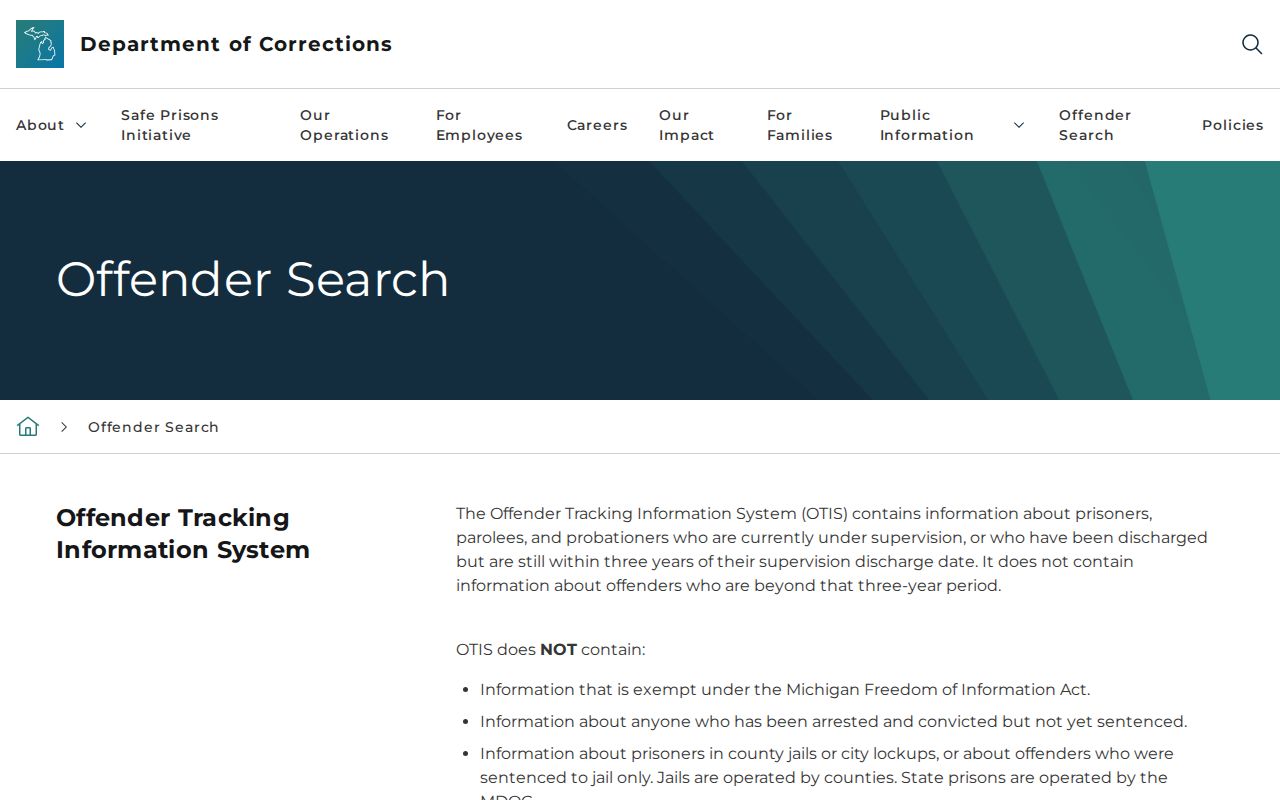
Read the coverage statement before drawing any conclusion from a result, or from a no-result. A state-supervision locator and a court file answer different questions entirely.
Note: Older 67th District Court matters need the records-request route, even when a newer case appears through MiCOURT.
Mount Morris Township Vital Record Boundaries
Michigan's Division for Vital Records and Health Statistics issues certified copies for state events, and the Genesee County Clerk serves as a local contact for event records and applications. Access rules differ by record type. Under MCL 333.2882, a live birth record stays restricted for 100 years except to the subject and other eligible requesters. The historical-copy rules under MCL 333.2885 use their own periods: 110 years for birth, and 75 years for death, marriage, and divorce.
Do not stretch a vital-record inquiry into a general name search. The state application asks for event-specific identifiers, applicant details, and a signature. A divorce certificate is also not the judgment itself. For the judgment or the full file, go to the county court clerk. The Library of Michigan's vital-record research material supplies historical index and microfilm paths when an event falls within its documented collections.
Note: A historical index can point to an event, but it does not guarantee an online image for every Mount Morris Township record.
Verifying a Mount Morris Township Resident
Verification is really just making two independent records agree on one narrow fact. Start with BS&A when you need a current property connection. Copy down the owner styling, parcel number, legal description, situs address, and any sale reference shown. Then bring in the Register of Deeds. That office lets you confirm the legal description and the recorded parties on the deed. A court result works differently. Confirm the county and case number with the clerk instead of trusting a name match alone. Common names travel across court systems.
- Choose two anchors, such as a full name plus an approximate year or a full name plus a Mount Morris Township parcel.
- Search BS&A by name, address, or parcel number and record the distinction between situs and tax-mailing fields.
- Compare the legal description or instrument reference against the Register of Deeds, then preserve the document date and party role.
- Use a court, voter, historical-directory, obituary, or probate source only for the narrower question it can answer.
- Ask the owning custodian for a focused copy or correction when the evidence conflicts or the result affects an important decision.
Tracing a deceased owner takes a different route. A probate filing may name a fiduciary or surface a public estate record. An obituary or death index can narrow the time frame. Neither one proves a current address. For a former classmate, the Genesee District Library and Library of Michigan databases hold period newspaper and directory context. That helps place a person in an era. The historical volumes get fuller treatment in the Mount Morris Township city directories.
- Docket
- The chronological list of filings and actions recorded by a court for one case.
- Index versus image
- An index points to a record; an image is the viewed document page. The image or clerk copy controls when details differ.
- Certified copy
- A copy authenticated by the custodian for uses that require official certification, rather than a plain research copy.
Resident Lookup Fields and Record Roles
Write down the fields that identify the source, not just the name on the page. MiCOURT, for example, may return a participant name, case number, court or division, case type, filing date, party role, and docket events. It also lists a public disposition or status. The Register of Deeds index works differently. It can return a document code, book type, year range, and alphabet letter. It may also list a grantor or grantee name, a book-page reference, and an image path. Treat each inventory as a description of a record system. No result promises that every field appears every time.
| Field | Why it matters |
|---|---|
| Exact name and role | Separates a party, owner, grantee, fiduciary, or applicant from a general name match. |
| Record date | Shows when the recorded event, case action, or property transfer occurred. |
| Custodian and reference number | Lets the requester return to the office that can inspect, explain, or correct the record. |
| Location or legal description | Helps distinguish a township parcel from the adjacent city or another Genesee location. |
Michigan's public sex offender registry is a specialized statutory record, not a general identity database. Its official search modes include name and registration or MDOC number. You can also search by address with city, county or ZIP. A neighborhood-radius option is offered too. The registry states plainly that its coverage has legal limits. It does not replace the court of conviction or another record custodian. The Michigan State Police registry page sets out those search categories and statutory limits on its face. That is why it belongs in any resident lookup toolkit for Mount Morris Township.
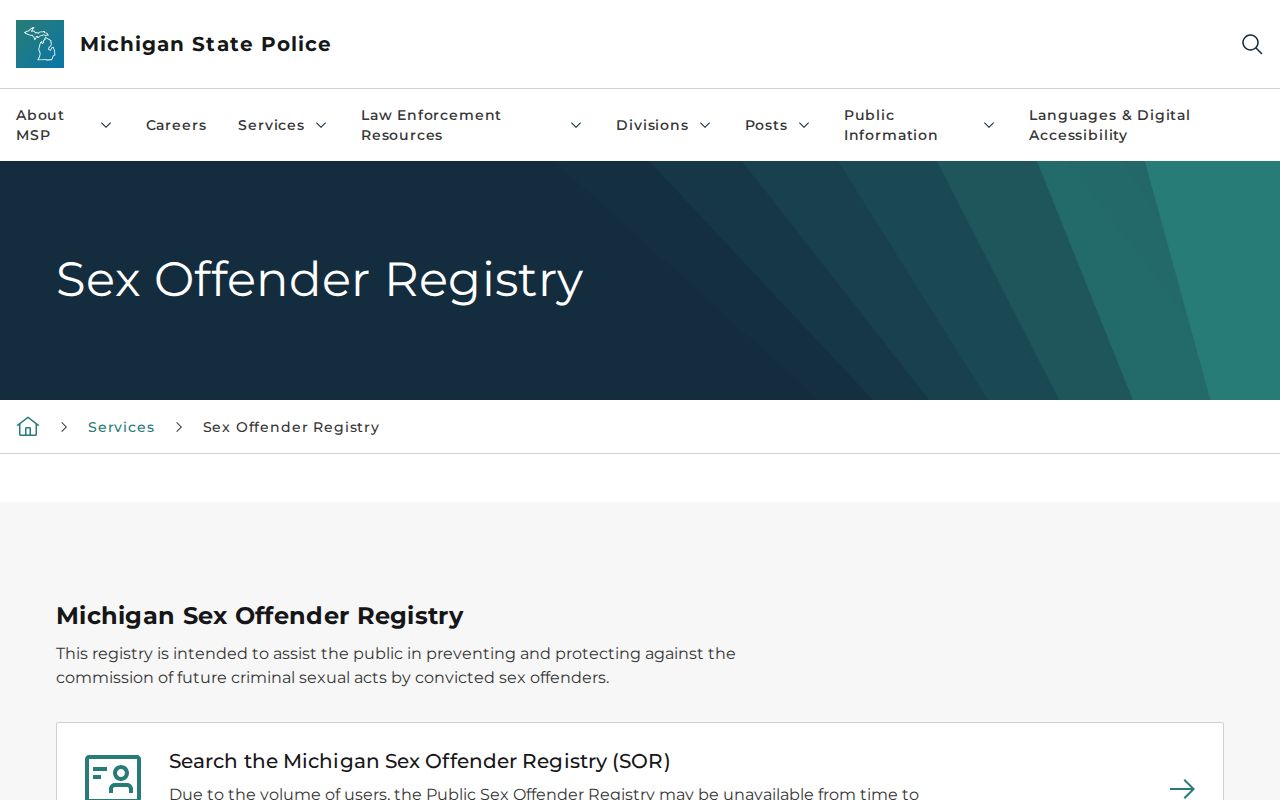
The image supports a narrow source check only. Never combine it with unrelated records to build a claim about a person that no single source supports.
Mount Morris Township FOIA Fallback
When a township or county record has no public index, Michigan FOIA is the documented fallback. A good request names the department and the record type. It also names the person. Include the address or parcel if known. Add the date range and the format you want. State whether you seek inspection or a copy. The law never requires an office to build a new resident list or disclose exempt information.
Michigan FOIA, MCL 15.231 through 15.246, generally calls for a response within five business days. A public body may take a written 10-business-day extension. Search, review, separation, copying, and mailing charges are capped by MCL 15.234. The Michigan Attorney General FOIA guidance and the county's FOIA route explain the full request framework. A narrow request reaches the right custodian far more often than a broad demand for names.
For an unindexed older court matter, the 67th District Court records route is the path. For a permit, code, election, or older clerk record, identify the township department first. Then give the date range. The township offers no public code-case search, and the county publishes no public jail roster. State those gaps in the request itself rather than filling them with assumptions.
Mount Morris Township License Verification
A state professional-license record can separate two people who share a name, at least when the search concerns a listed professional role. Michigan LARA State License Search is the official route. A current report there can show name, profession, license type, status, expiration, address, issue date, specialty, and sometimes email. Labels on the live site can change. Capture the current wording instead of assuming every field always appears.
An entity filing or a registered office is not automatically a personal address. Keep the entity, the parcel owner, the permit applicant, and the resident as separate record roles until two independent sources support a limited conclusion. That discipline keeps a common name from merging with the wrong person. Michigan's license-search entry point provides the state verification route in the image below.
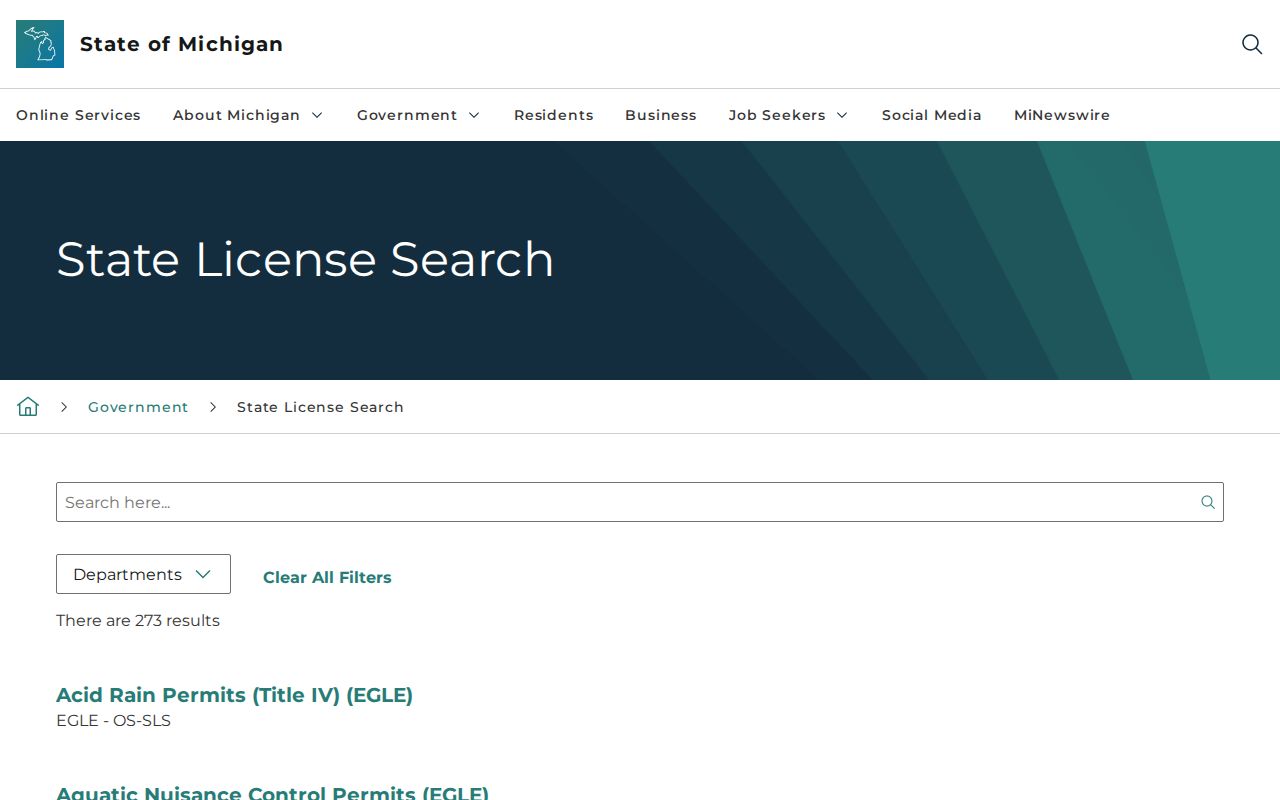
A current license result can confirm a state-issued status when it matches the right person. It cannot, by itself, establish where that person lives now.
Mount Morris Township Resident Privacy Limits
Michigan Election Law MCL 168.509gg keeps certain voter details out of public hands. Withheld items include driver-license and state-ID numbers, month and day of birth, phone numbers, digitized signatures, the last four SSN digits, declined-registration information, and the office that received an application. QVF requests also demand a defined geography. Michigan does not register voters by party. A primary-history entry is therefore not a party-registration field.
The state's Address Confidentiality Program helps qualifying people at risk of harm. It gives them a designated substitute address and mail forwarding. A substitute address is never an invitation to locate someone. Birth and adoption materials, protected court records, private utility data, and restricted motor-vehicle information each carry separate limits. When a source is wrong, go back to its custodian. That means the assessor for parcel information, the clerk for voter information, the court clerk for a docket, and the relevant state agency for its own file.
Lawful use. Use Mount Morris Township resident records for lawful personal research and verification. Public information never permits stalking, harassment, intimidation, or an attempt to defeat a protected address.
Mount Morris Township Contact-Right Myth
Finding a name in a public record does not grant a right to contact that person. It does not permit monitoring or following either. It is not permission to publish details about them. Michigan law draws a hard line here. The anti-stalking statute, MCL 750.411h, covers willful repeated harassment or unconsented contact. That contact must cause fear, intimidation, or threat. A good stopping point is the custodian's own record and its date. A synthesized personal profile assembled from many sources goes well past that.
Commercial people-finder services sit in a different category from official custodians. They blend old public filings, marketing data, and licensed datasets. The result can be stale. It can also merge two people who share a name. Protected participants may be missing from them too. Any lead should be verified with the government office, court, library collection, or recorder that owns the underlying record. Do not rely on it before that check.
For federal custody questions, the Federal Bureau of Prisons inmate locator is the official tool. Federal custody is separate from Michigan supervision and Genesee County custody.

A federal lookup answers only the narrow federal question it covers. A no-result in one custody system proves nothing about any other.