
Sources for Mount Morris Township Previous Residents
The best source depends on the period. A current parcel record supplies the legal description behind a recorded transfer. The county deed system handles ownership. Flint-area directory reels and census releases supply dated household evidence instead. Their dates matter. Library guides, newspapers, and vital or probate material close a trail after a move, a death, or an estate transfer, and the table separates confirmed coverage from routes that still need a check at the holding office.
| Source | Years it covers | Where held | What it can show |
|---|---|---|---|
| Register of Deeds online records | Current route; pre-1983 not online | County portal or office | Recorded instruments and title references |
| County electronic images | 1970 forward in county records material | County system / onsite | Images that may not have a searchable index |
| Flint-area directory reels | 1916–1957, with listed gaps | Library or microfilm catalog | Address, household head, phone, and business clues |
| Older directory lead | 1905–06 through 1921 selected years | Confirm with the holding library | Earlier name and street evidence |
| Federal census | Released under the 72-year rule | National Archives and approved databases | Household snapshot at a census date |
| Newspapers and vital indexes | Coverage varies by collection | Library databases, microfilm, and state resources | Notices, family links, events, and date checks |
A recent Mount Morris Township transfer starts with BS&A and the deed chain. A mid-century household question works differently. Test the address in the actual directory reel. Pair that with the census date. When a trail reaches a death or estate, turn to a dated obituary, a death index, a cemetery record, or a probate request, since a past-residents result grows strongest when two independent layers agree.
Mount Morris Township Address Eras
Genesee County's records history sets firm limits for past-residents research. Deeds before 1983 are not online. The Register of Deeds says so directly. County records-management material separately describes electronic images from 1970 forward, plus a single-page album scanned but not indexed back to 1970. Different systems are in play here. A document may exist as an image yet still need a historic index, an onsite search, or staff help to locate.
The Library of Michigan Genesee County guide extends the search past digital results. It lists local histories, the 1873 Beers atlas, county plat books from 1959 through 2000, cemetery and death-index leads, and newspaper collections. The township has no house-history service. It has no indexed address-research form either. Send an address request to the custodian instead.
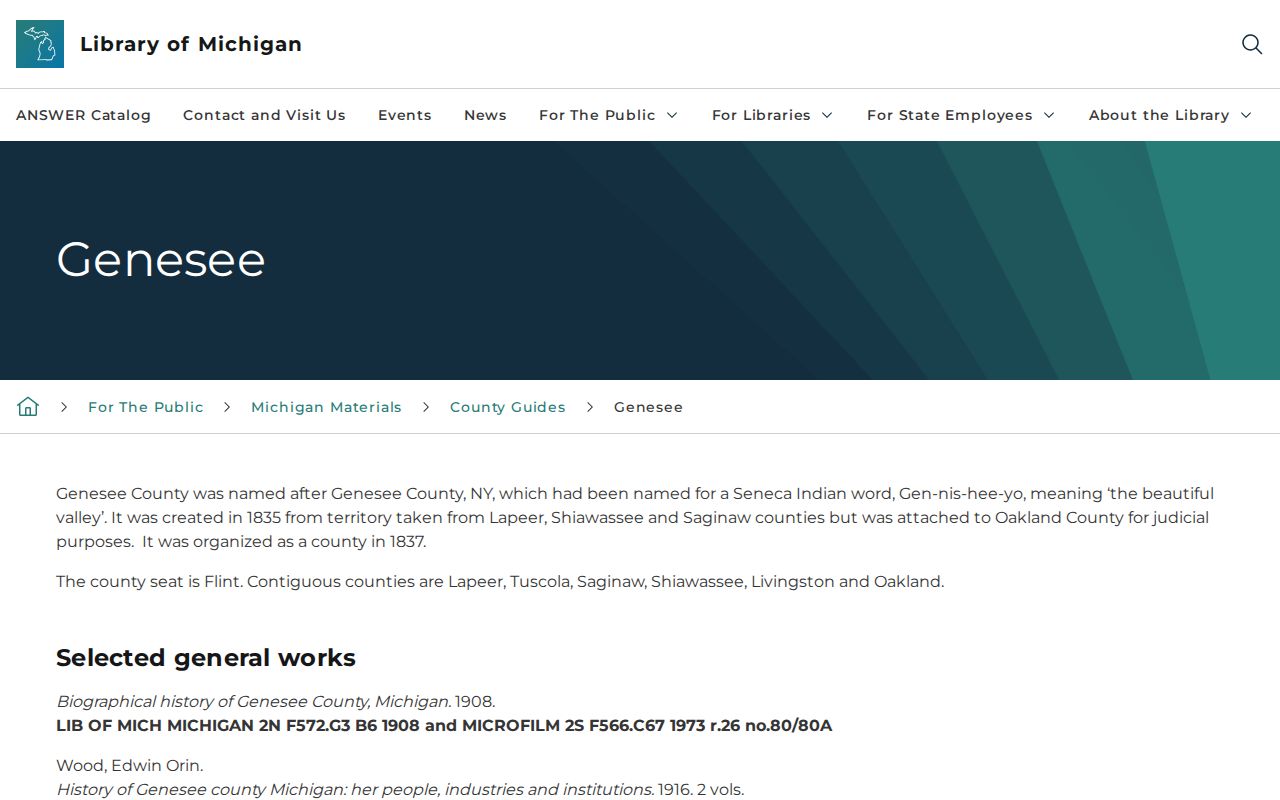
The guide is a shelf, not a full index. When a collection yields evidence about a former household, record the collection title, volume or reel, page, image, and repository.
Mount Morris Township Deed Trail
A deed chain follows title, not every occupant. Open with Mount Morris Charter Township BS&A Online. Capture the present owner display, parcel ID, situs address, tax mailing address, legal description, and any visible sale clue. The legal description matters most. Historic deeds often identify land by lot, block, subdivision, or metes and bounds rather than a modern street number.
- Find the current parcel in BS&A, then save its legal description and parcel number separately from the mailing address.
- Search the Genesee County Register of Deeds online records for the purchase instrument or its index reference.
- Read the instrument image or obtain the controlling copy. Record date, grantor, grantee, instrument number, book/page, legal description, and any prior-reference clause.
- Search the seller from that transfer as an earlier grantee. Repeat the sequence only while the legal description continues to match.
- At the online cutoff, use the historic index books, microfilm or album route, an onsite search, or a focused request to the Register of Deeds.
- Grantor
- The party transferring an interest in a recorded instrument.
- Grantee
- The party receiving that interest in the instrument.
- Chain of title
- The linked sequence of recorded transfers for the same legal parcel.
- Legal description
- The land identity used by title records, often more reliable than a changing street form.
Mortgages and releases can supply finance dates or party names. They are not occupancy records. When a seller is an estate, trust, bank, or corporation, preserve the exact name and move to probate or entity records only as the context warrants.
Mount Morris Township 1983 Index Gap
Older deed research needs a different technique, not a guessed date range. Genesee County's historical index-book guide gives the method. Select Document Type “Index” first. Then work the Deed Index Book or Mortgage Index Book. Move by year and first letter. The documented codes are DE for grantor and grantee, DEGR for grantor only, DEGE for grantee only, and MTG for mortgage grantor and grantee, and The Genesee County Register of Deeds is the custodian for this route.
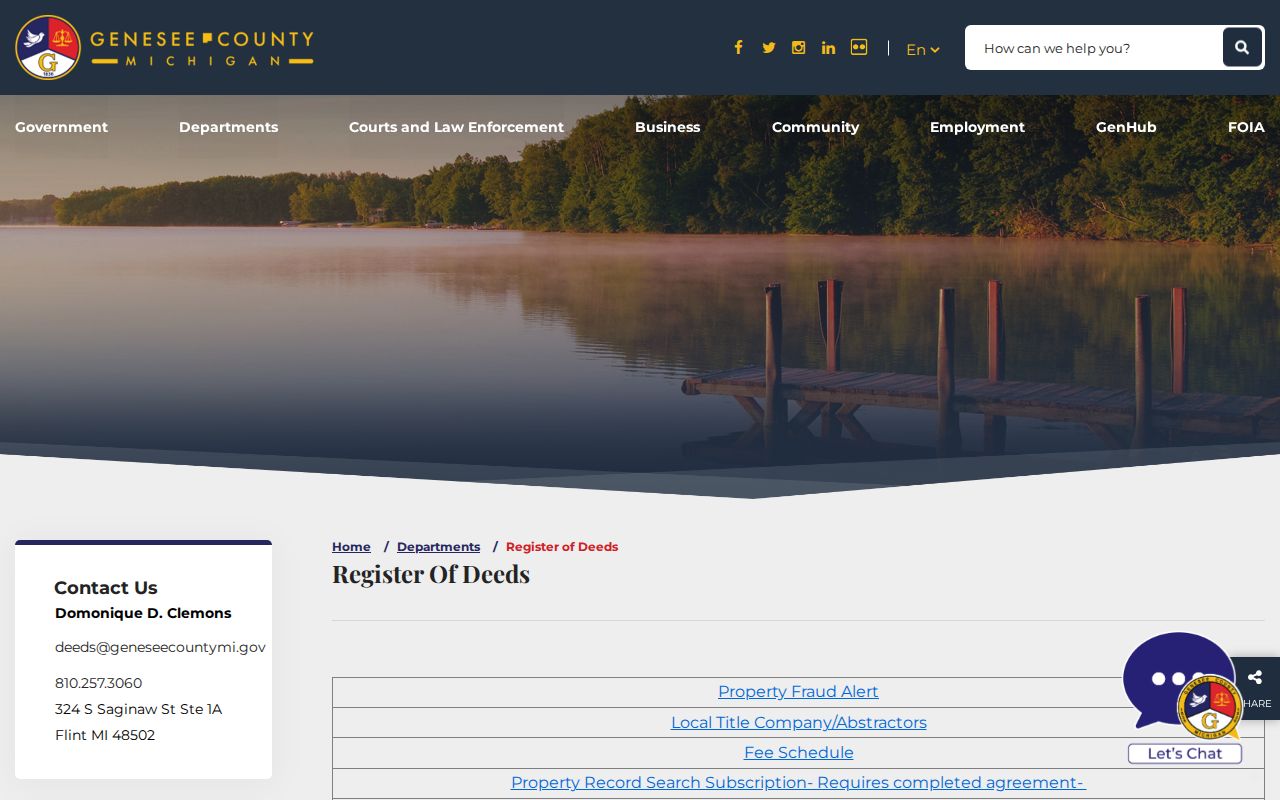
Keep the book-letter, year range, party spelling, and Liber/Page window open. Do this while reading the image navigation. Snippets do not control the result. The final recorded instrument does. Copies and certifications carry separate costs. The office can confirm the live route for a particular book or page.
Note: A historic index is only a finding aid. Follow its reference to the recorded image or office copy before treating any transfer as established.
Mount Morris Township Past Resident Reels
Directories form the household bridge between ownership records, and the Flint-area reel inventory covers Mount Morris from 1916 through 1957 with gaps and combined-year reels mixed in. Confirm coverage year by year. A Polk volume has two sections. Search the surname and street sections both. A Bresser or criss-cross volume instead starts from the street and house number. From that printed entry, capture the head of household or business, the phone, and any move or new-address notation. Ask before promising a particular Bresser volume.
The Library of Michigan city-directory guide explains the Polk and Bresser formats. Collection details live on the Mount Morris Township city directories page. Test one address in each documented year. Copy the volume title, printed year, reel or page, section label, street number, and every abbreviation exactly.
A directory entry is dated evidence. It can differ from the parcel owner. A missing entry proves nothing about continuous history. Work with one name, address, spouse or parent, and date at a time to avoid merging same-name people.
Mount Morris Township Census Pairing
The federal census captures a household on one day, not an address across years. 1950 is the newest full decennial count generally open under the 72-year release rule. Pair a directory edition close to the census date. Then weigh spelling, age, relationships, birthplace, and the geography the enumerator recorded. Keep the directory's street order and the census enumeration geography as separate records. Do that until the address connection holds up on its own.
One sequence works well. Start with the parcel and legal description, then the recorded owner trail. Follow with the directory street entry, then the census date, then a newspaper or obituary check. Suppose the directory and the census disagree. Record the difference plainly. Do not pick the answer you prefer. A household could have moved between printing and enumeration. And directory names do not always mirror a parcel record.
For leads past the census, Genesee District Library databases offer Flint Journal access, HeritageHub obituary and death notices, FamilySearch, and branch-use research resources. Access terms differ by database. A newspaper notice still needs a date and corroboration beside it.
Past Residents: Obituary and Probate
An obituary can explain why an address trail ends. So can a cemetery index, death record, or estate file. Coverage can be incomplete. The Library of Michigan guide lists Flint Daily Journal coverage for 1903–1935 and Flint Journal coverage for 1935–2018, while GDL traces Flint Journal resources from 1898 to today. Cite the publication date and page or database result. Then compare the notice against a vital record or court record. Do this before concluding a former household left the address.
For the historical-index and microfilm route, Library of Michigan vital-record research is the source. That library page is the place to begin.
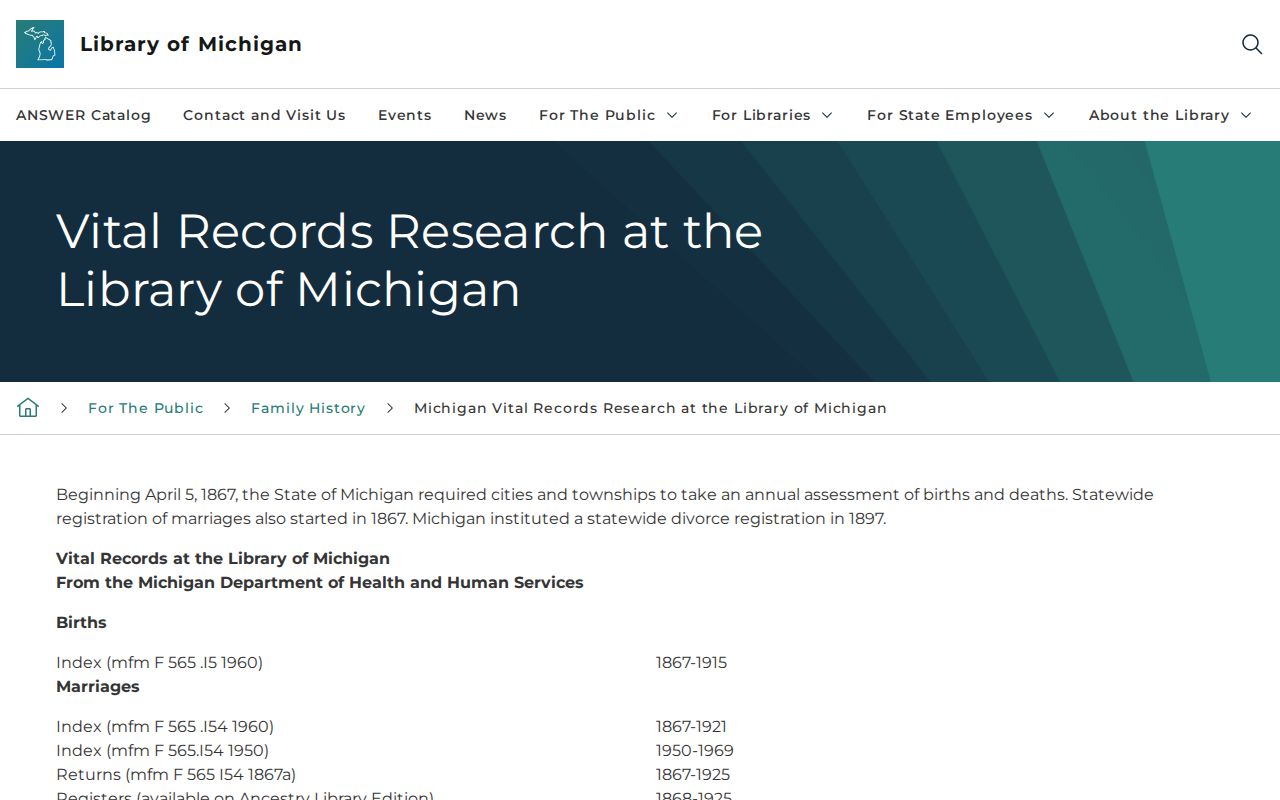
Michigan state registration begins in 1867 for births, deaths, and marriages. Divorces start in 1897. Copy eligibility varies by record type. For an estate, Genesee Probate Court records requests provide a specific copy route. An heir or fiduciary address in a filing is part of that filing. It is not proof of a present address.
The Register of Deeds fee schedule lists the separate charges for routine copies and certified copies.
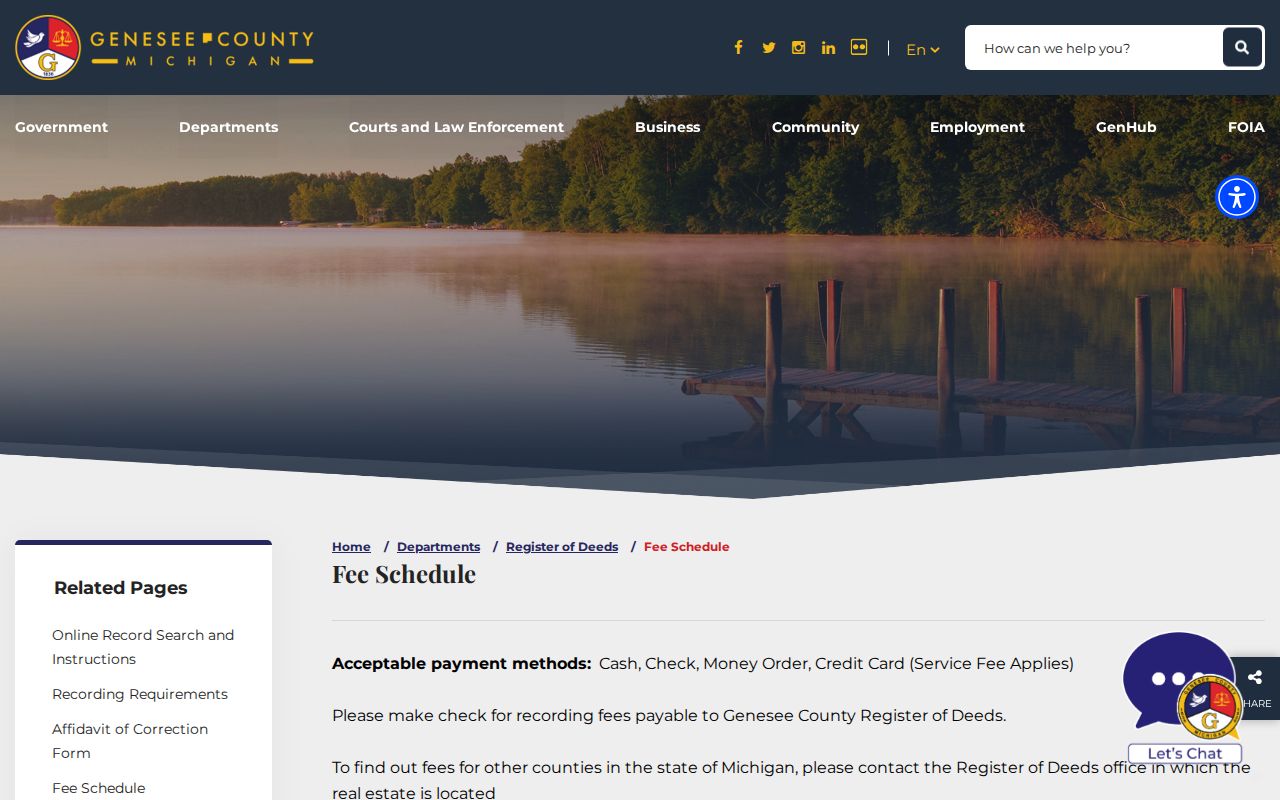
The fee schedule separates routine copies from certified copies. Ask the office which format you need before ordering. Keep the book, page, or instrument reference with every copy you receive.
Mount Morris Township Address Continuity
The township publishes no official street-renumbering or street-renaming chronology with a verified year. Do not force a conversion. Assumption is not evidence. A safer crosswalk draws on several anchors. These include the parcel legal description, the subdivision lot or block, the directory abbreviation key, the county plat, the 1873 Beers atlas lead, and the mapped parcel.
The recurring trap is jurisdiction. Mount Morris Township, the separate City of Mount Morris, and Flint postal labels can all appear in one research area. Classify each record by parcel jurisdiction and precinct or municipal context. The postal label follows the mail route, not the boundary. When a street result stays ambiguous, keep the exact form from the source. List the unresolved link as unresolved.
Note: A missing street-history record is a reason to document the gap, not a reason to invent a conversion year or a continuous address history.
Mount Morris Township Previous Resident Limits
Past-residents research should separate a recorded owner, a tax mailing recipient, a directory entry, a census household, and a voter registration. Each source answers one narrow, dated question. Private utility accounts stay private. So do Driver's Privacy Protection Act information, protected addresses, and non-registered household members. None of them is a public address-history tool. The strongest historical conclusion uses matching records and states the date attached to each one.
The Michigan Address Confidentiality Program gives qualifying people a designated substitute address with mail forwarding. Never try to derive a protected location. If a record contains an error, ask the source custodian to correct the underlying assessment, election, court, or recorded document record. An unrelated compiled result will not do.